2026-09-02 · Mike Torres
Swamp Cooler or Central AC: What Actually Works at 6,000 Feet
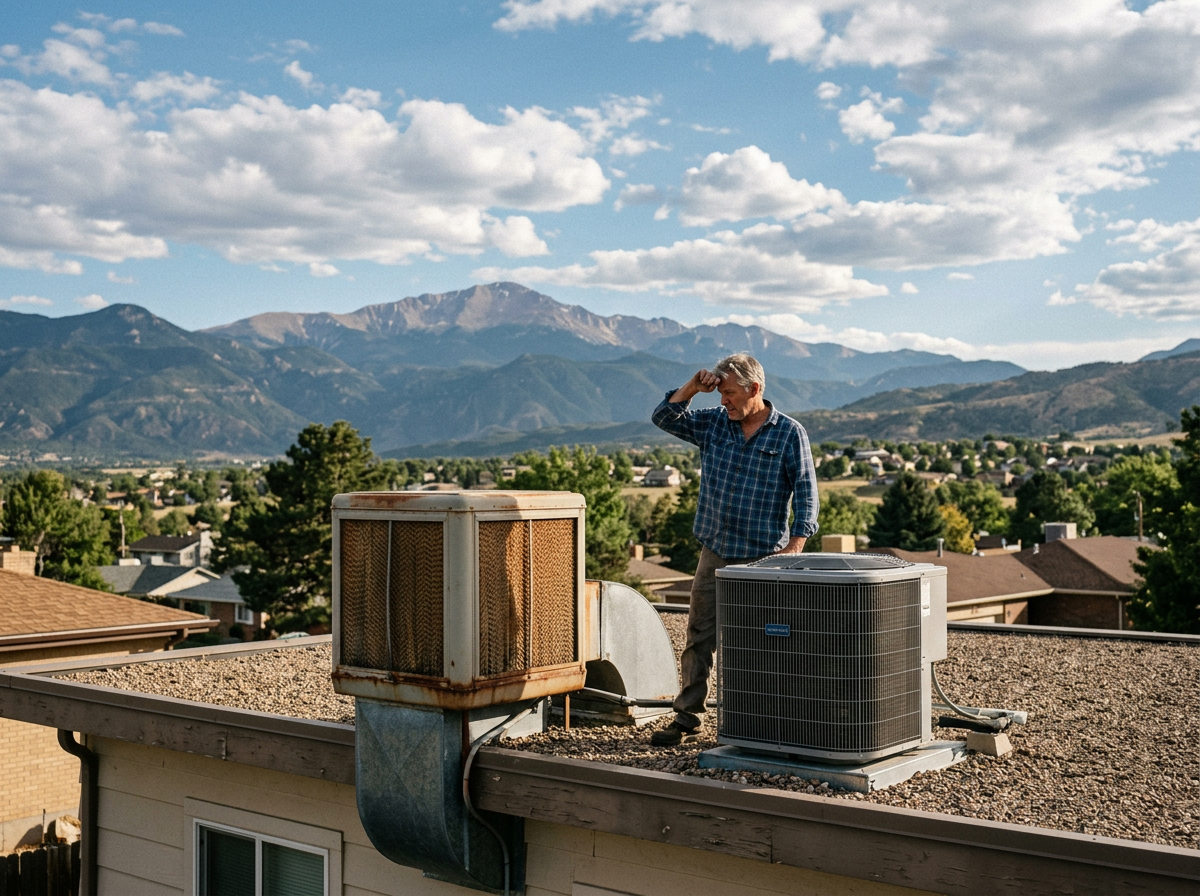
Central AC systems deliver more consistent performance than swamp coolers at 6,035 feet around Colorado Springs. The dry air common here reduces evaporative cooling output, while condenser units face repeated hail impacts that raise head pressure and cut efficiency. Altitude derating of roughly 4 percent per 1,000 feet above 2,000 feet also changes airflow and capacity calculations for both options.
How Elevation Changes Equipment Output
At 6,035 feet the thinner air reduces heat transfer rates in both evaporative and refrigerant systems. Swamp coolers rely on water evaporation into already low-humidity air, which limits temperature drops to 15-20 degrees on peak days even when pads stay saturated. Central AC units require high-altitude orifice kits and adjusted charge levels to maintain proper compression ratios; without them, systems short-cycle and fail to reach set points during afternoon heat. Service calls to areas like Woodland Park at 8,465 feet show further capacity losses that homeowners must factor into sizing decisions. Air Conditioning Installation accounts for these exact derating numbers during load calculations.
Swamp Cooler Limits in Dry High-Altitude Air
Swamp coolers add moisture that can feel clammy once indoor humidity climbs above 40 percent, a common outcome when daily swings reach 30-40°F and chinook winds arrive. At Pueblo elevations around 4,692 feet the units still struggle on days when dew points stay below 30°F, delivering only marginal relief. Maintenance involves frequent pad replacement and pump checks because mineral buildup accelerates in the region’s hard water. Homeowners often see 8-12 year lifespans before corrosion forces replacement, and the units provide no dehumidification during monsoon remnants that occasionally reach the Front Range.
Central AC Performance With Hail and Temperature Swings
El Paso County hail flattens condenser fins on exposed units, directly raising head pressure and shortening compressor life. The linked article on hail damage outlines inspection steps after storms. Systems installed with hail guards and fin straighteners maintain rated capacity longer, yet still require annual coil cleaning because dust from dry conditions clogs fins quickly. During October-to-April heating season the same outdoor units sit idle, yet must withstand freeze-thaw cycles that crack cabinets if not properly winterized. AC Repair addresses these seasonal issues before summer peaks return.
Cost and Lifespan Comparison at Local Elevations
Installed central AC costs typically range $4,500–$7,500 for a 3-ton high-altitude unit, with 12-15 year expected life when maintained. Swamp cooler replacements run $1,800–$3,200 but often need earlier service due to pad and pump failures. Electricity use favors central AC on the driest days because fans move less air volume at elevation, while swamp coolers consume steady water that adds $20–$40 monthly in peak summer. Neither option qualifies for generic national efficiency charts without local orifice and charge adjustments.
Practical Takeaway
Measure indoor humidity and inspect condenser fins after each hail event before deciding between the two systems. Track how far indoor temperatures drop on the hottest afternoons to confirm whether current equipment meets needs at your exact elevation.