2026-09-02 · Mike Torres
Hail Damage to AC Condenser Fins: What El Paso County Homeowners Should Check
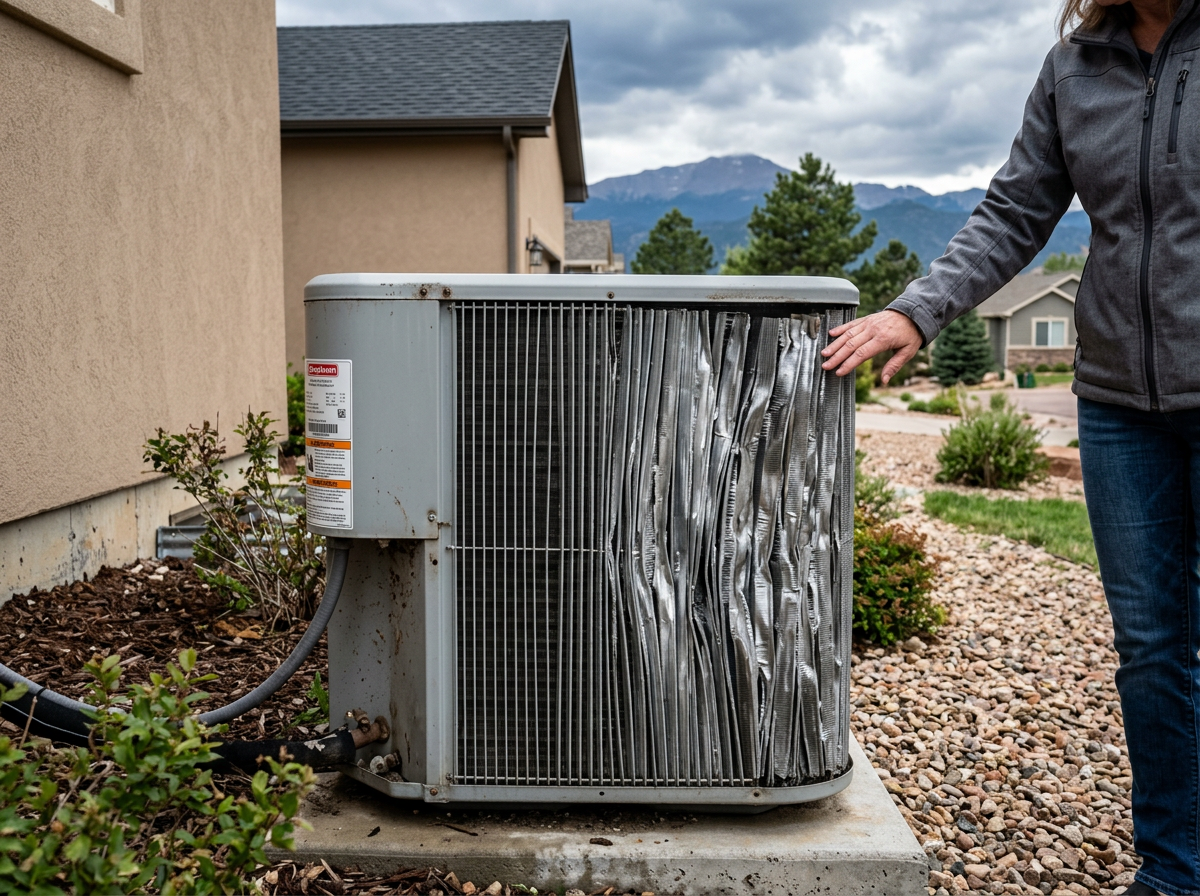
El Paso County homeowners should first inspect condenser fins for flattening after any hail event, as this raises head pressure and cuts efficiency at 6,035 ft elevation where combustion and airflow already face derating of about 4% per 1,000 ft above 2,000 ft.
Inspecting Condenser Fins for Hail Flattening
Walk around the outdoor unit and look straight on at the coil faces from multiple angles. Hail typically bends the thin aluminum fins inward or crumples them in patches, especially on the top and side surfaces that face prevailing storm directions. Use a fin comb or soft brush only after confirming no active leaks or electrical issues. Note any areas where fins appear matted or closed off, because even 20-30% blockage increases head pressure noticeably. Compare the damaged side to the undamaged side if the unit has protective grilles on only one face. At our elevation, restricted airflow compounds the derating already present in high-altitude orifice and conversion kits, so small visible changes produce larger efficiency drops than at sea level. Check after every significant storm because 30-40°F daily swings can mask gradual performance loss until the system struggles during peak heat.
Elevation Effects on Airflow and Draft
Colorado Springs sits at 6,035 ft, and service areas range from Pueblo at 4,692 ft to Woodland Park at 8,465 ft. Higher elevations reduce air density, which changes how the condenser rejects heat and how the fan moves air across the fins. Hail-damaged fins worsen this because the reduced open area further restricts the already thinner air mass. Homeowners should note that combustion air and draft effects also shift with elevation, though the immediate concern here is the condenser side. After fin damage, the system may short-cycle or run longer to reach setpoints, especially when chinook winds suddenly raise outdoor temperatures. These elevation-driven changes mean a visual fin check alone is not enough; performance must be observed across the full daily temperature swing. Swamp Cooler or Central AC: What Actually Works at 6,000 Feet explains related airflow differences that apply directly to damaged condensers.
Checking Head Pressure and System Behavior
Monitor indoor temperature consistency and listen for the outdoor fan running longer than normal after sunset when temperatures drop. Raised head pressure from flattened fins shows up as warmer supply air or higher electric bills during the cooling months. Because heating season runs October to April, many units sit idle for months, so spring startup is the first real test after winter hail. Very dry air in the region means less evaporative help on the coil surface, making mechanical fin damage more consequential. If the unit struggles to maintain 72°F when outdoor readings hit 85°F, flattened fins are a likely contributor. Record the date of the last hail event and any visible changes so a technician can correlate timing with performance data.
When Professional Assessment Becomes Necessary
If more than scattered fins appear bent or the unit runs continuously without reaching setpoint, schedule AC repair rather than attempting further DIY correction. Technicians can measure actual head pressure, verify high-altitude kit settings, and determine whether fin straightening will restore performance or if coil replacement is required. Service calls cover areas such as Peyton and Fountain where storm paths often concentrate hail. Furnace Short Cycling During Colorado's 40-Degree Daily Swings covers related stress on the full system that often appears alongside condenser issues. Practical takeaway: photograph the fins after each storm, note any change in run times, and address flattening before the next cooling season begins.