2026-09-02 · Mike Torres
Why Gas Furnaces in Colorado Springs Must Be Derated for Altitude
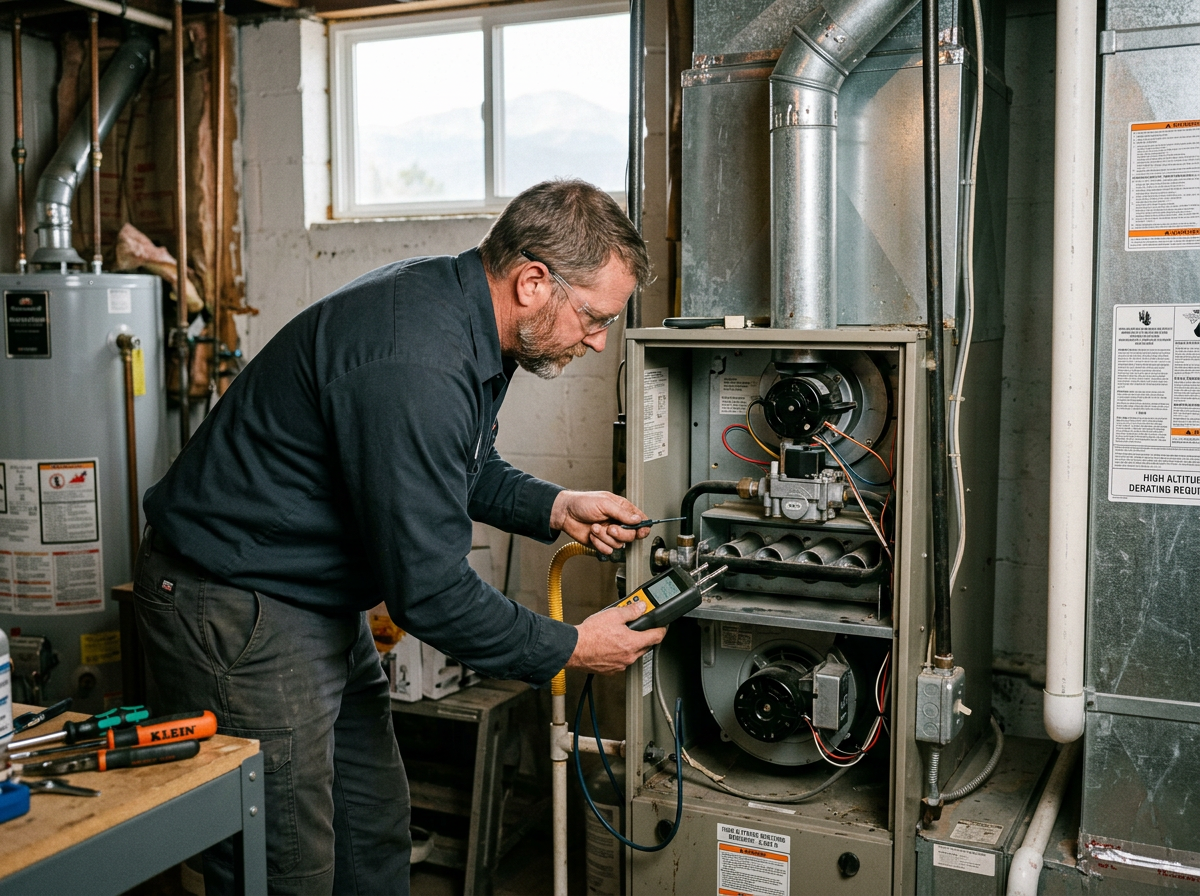
At 6,035 feet, gas furnaces in Colorado Springs must be derated approximately 16% from sea-level ratings because oxygen density drops enough to starve standard burners. The rule starts at 2,000 feet and subtracts 4% input capacity for every additional 1,000 feet, so the math yields a 16% reduction that keeps flame temperature and exhaust within design limits.
How Elevation Changes Combustion Air Supply
Lower air pressure at 6,035 feet reduces the mass of oxygen reaching the burner by roughly 16%, so an undrated 100,000 BTU furnace actually delivers only about 84,000 BTU of useful heat while producing excess carbon monoxide and overheating the heat exchanger. High-altitude orifice kits resize the gas ports to match the thinner air, restoring the correct air-to-fuel ratio. Without the kit, draft hoods and combustion air intakes pull insufficient volume, especially when chinook winds create sudden pressure changes. Service technicians measure manifold pressure after installing the kit to confirm the derated input stays within manufacturer limits for the elevation.
Local Temperature Swings and Furnace Stress
Daily swings of 30-40°F between daytime highs and nighttime lows force the furnace to cycle more often, amplifying any mismatch in orifice sizing. When temperatures drop quickly, an overfired unit short-cycles before the heat exchanger reaches steady state, wasting fuel and stressing components. The same 16% derating that corrects for altitude also stabilizes operation across these swings. Homeowners in areas such as Woodland Park at 8,465 feet face an even steeper 26% reduction, making professional measurement essential rather than a generic national guideline.
Orifice Kits, Draft Effects, and Safety
Conversion kits include smaller orifices, sometimes a different burner assembly, and revised pressure settings that compensate for the 4% loss per 1,000 feet above 2,000. Draft hoods must still maintain proper venting; thinner air changes the buoyancy of flue gases, so technicians verify draft with a manometer after the change. El Paso County hail can flatten condenser fins on paired cooling systems, but the furnace itself sees indirect effects through shared ductwork that alters return-air temperature and combustion air quality. Proper derating keeps the unit from running hot when dry winter air reduces heat transfer inside the home.
When to Check Derating During Service
Furnace repair calls often reveal improper derating when homeowners notice yellow flames, soot on registers, or higher-than-expected utility bills. A technician replaces orifices and retests combustion at the current elevation rather than assuming a factory setting works at 6,035 feet. Furnace installation at this altitude always includes the kit; skipping it shortens heat exchanger life from the expected 15-20 years down to 8-12 years. Related reading on furnace short cycling during Colorado's 40-degree daily swings shows how altitude mismatch compounds cycling problems.
Practical Takeaway
Measure your furnace nameplate input, subtract 16% for Colorado Springs elevation, and confirm the orifice kit matches that reduced rate before the next heating season. This single adjustment prevents most altitude-related failures without requiring new equipment.